Relay and amplification
I haven’t written here in a while, primarily due to the impeachment hearings taking up huge chunks of my time, but also due to focusing my writing efforts on my fiction work.
So I thought I’d take an example from Fox News where they relay and amplify Trump campaign messages instead of behaving like actual journalists, even on their “news” shows—in this case, “Fox and Friends First”.
You can see the video on the Fox News site. I tried to embed their video, but their terrible video player autoplays with no apparent way to disable it.
The framing of the piece is the “significant concerns” around FISA process, and not how the IG report completely debunks the paranoid conspiracy theory that Trump and his surrogates have been pushing for years that the FBI was out to get him, because they wanted Hillary to win or because they wanted to remove Trump when he got into office.
The IG report found that there was no political bias in efforts to surveil the President’s 2016 campaign (which, to be fair, the Fox piece leads with). It literally includes a text message from one FBI supervisory special agent (SSA) saying he “was so elated by the election”, comparing election coverage to “watching a Superbowl [sic] comeback”. When asked to clarify (this is from a footnote on page 339 of the IG report):
The SSA explained this comment to the OIG by saying that he “fully expected Hillary Clinton to walk away with the election. But as the returns [came] in…it was just energizing to me to see…[because] I didn't want a criminal to be in the White House.”
Brought in to react to the report was not an independent legal adviser, not even someone from the Heritage Foundation or even bizarre flex-shot-posting conspiracy theorist Tom Fitton, but a Trump 2020 campaign senior legal adviser Jenna Ellis, someone whose bias should be assumed for very obvious reasons.
Let’s pick through Ms Ellis’ words:
This is absolutely chilling, and this should shock the conscience of every American. The Democrats of course are going to try to minimize this in the main-stream media—
After making a brief characterization of the report, she does not explain or elaborate on her position, but instead immediately jumps to dismiss contrary positions and to continue the long trend of dismissing the main-stream media.
—but make no mistake Rob and Jillian, this is absolutely an abuse of authority, just as the Democrats are doing with the impeachment process, just like they did with the Mueller Report. This is yet another instance where we’re seeing that the Democrats and the Obama FBI have manipulated a power of the FISA court for a purpose that was completely unlawful. To spy on American citizens, and an opposition campaign.
She then conflates the FBI actions here with Democrats actions relating to impeachment, and goes even further in implying that “the Democrats” (a political party, rather than individual actors in the FBI who may or may not have particular political afficiliats) have been somehow involved in making FISA court applications.
The implications of this would be truly terrifying, but the report finds the exact opposite:
What worries me more are the effects of Ellis’ position (which mirrors that of the Republican Party as a whole) to continue to “other” political opponents of the President, and to dismiss actions against the President as wholly politically motivated.
So when you look at the intended purpose of the FISA court, this is not it, and so we have a report that absolutely says, with clarity, that the FISA court process was abused, and that there were substantial inaccuracies in order to obtain those warrants, and in order to spy on American citizens. That is absolutely intolerable, and should never happen in the United States of America.
I am in agreement with with Ellis here. The FISA process was abused. I would go further and say that FISA has always been open to abuse. However there was no sign of political bias here.
Rob Schmitt chimes in:
You know the report—and this is what Comey was talking about, feeling vindicated—said that there was no grand conspiracy against the president here, but here’s Attorney General Bill Barr, and then John Durham, who’s doing his own investigation—we’re going to put these both up. “The Inspector General’s report now makes clear that the FBI launched an intrusive investigation of a U.S. presidential campaign on the thinnest of suspicions that, in my view, were insufficient to justify the steps taken.” And then John Durham comes out—and we haven’t really heard anything from him: “Based on the evidence collected to date […] we advised we do not agree with some of the report’s conclusions as to predication and how the FBI case was opened.” So, Durham read at least some part of this thing, and immediately came out with a statement. What’d you make of that?
Instead of any real interrogation of their guest, Schmitt instead provides additional context from other friendly sources. One of these sources, Barr, has demonstrated repeatedly that he is not an objective arbiter of fact.
In fact, Schmitt’s entire framing is to raise something his guest would likely disagree with, and then dismiss it himself, before asking her to comment.
Ellis again:
Absolutely, and I was really happy to see that both Durham and Barr came out very strongly with this. And we have to put this in context. The Horowitz report for the Inspector General basically reads like an HR report. There are certain protocols that he’s looking at that differ between what Durham and Attorney General Bill Barr can do. So, looking forward, there’s going to be an investigation of what other abuse of process has occurred, because we know now that at least in this instance the FISA court was abused, and that should beg the question of how many other times have we seen this abuse that we don’t yet know about. And so, as Durham is going to release his report, as the AG comes out, then that’s really the next question is ‘where does this go from here?’ This is absolutely not over at all.
Ellis here points to other ongoing investigations, seeming to expect more favorable revelations in future. Jillian Mele says:
Well right, and Jenna, you know, Democrats are likely going to say something along the lines of “Well, Republicans are now going to be hanging on what Durham has to say”, but, in fairness, Durham does have a scope that’s more broad, and has more investigative powers.
Mele here repeats Schmitt’s trick of raising a possibly contrary view—in this case one that describes exactly what Ellis was doing—and then dismissing that view herself.
Ellis closes with this:
Absolutely, and he also has the handcuffs, so let’s—let’s not forget that the IG is also—again—is a lot more Human Resources-related as far as the internal protocols of the FBI and the DOJ, and this isn’t—his purview is not as expansive, and it’s not as criminal related in terms of actually coming out with charges, and the other things that both Durham and the attorney general can do. So again, this is far from over, and I think that the Democrats are trying to just minimize it in the media, but really what the American people should be very concerned about, bottom-line, is that this was an abuse of process, and we definitely need justice.
This is a somewhat confused end statement, as it seems like it’s a mishmash of points without any real clarity to any of them. But it’s live TV, she was running out of time, and it was about a thousand percent clearer than anything her boss has said, so I think she should get a bit of a pass here.
The handcuffs line is a bit dark, though. One of the major ideas in the Trump sphere is that many people have committed and/or are continuing to commit treason, often as part of some convoluted conspiracy theory, but sometimes merely by virtue of not being a toady for Trump. There are fantasies about locking up these people. Trump himself shared an image of some people, including his own deputy attorney general, locked behind bars. The handcuffs line echoes this.
So that’s it. That is the extent of their conversation about the IG report. I expect very little of televised news, and less of Fox, but this took me aback. Even with my low expectations, I would have assumed the barest of interrogation. Literally the only question is a chummy “What do you think of that?”
The purpose of such clips can only be seen as relay and amplification of messages of the GOP. That some people cannot see this speaks to the effectiveness of propaganda, generally.
Sermon
I start this by saying that I am not a Christian, though I used to be. I became one at the age of nineteen. I was lucky enough to learn with a very thoughtful collection of Christian friends.
I’ve since left this faith behind, seeing too much of Man’s artifice there in the church to believe that the construct could be fairly called Godly—seeing, far too often, and sometimes first-hand, how the idea of God was used to justify or hand-wave behavior ranging from the somewhat destructive to the truly despicable.
I mention this to qualify what I say next. There is a pursuit of worldly power by the church in the US that seems to be based in a misunderstanding of the nature of the Mission; this pursuit has caused the church to rot; and this rot is so advanced that I am not sure it would recognize Jesus.
A misunderstanding of Jesus’ goal
The Jewish people in the Gospels appear to be expecting a military king who would free them from the Romans. The Dead Sea Scrolls demonstrate this in its War of the Messiah segments. Herod seemed terrified that the Messiah would supplant him. Isaiah 11 also points to this expectation, as does John 6:
After the people saw the sign Jesus performed, they began to say, “Surely this is the Prophet who is to come into the world.” Jesus, knowing that they intended to come and make him king by force, withdrew again to a mountain by himself.
This isn’t what Jesus saw for himself. When he returns, he rejects his disciples worldly hopes of him, as told in Acts 1:
Then they gathered around him and asked him, “Lord, are you at this time going to restore the kingdom to Israel?”
He said to them: “It is not for you to know the times or dates the Father has set by his own authority. But you will receive power when the Holy Spirit comes on you; and you will be my witnesses in Jerusalem, and in all Judea and Samaria, and to the ends of the earth.”
In the writings of Paul, we see an opening-up of Christianity to non-Jews, including those in the Roman Empire. This opening up of Christianity seems very much at odds with a faith focused on the overthrow of the Roman Empire, or one concerned with the pursuit of political power.
The genesis of this present rot
In 1973, the Supreme Court ruled in Roe v. Wade that a woman has the right to obtain an abortion without excessive government restriction. After this, evangelicals became more involved in politics to fight back against the scourge of legalized abortion. Or so the myth goes.
Jerry Falwell made this claim explicit:
In his 2005 book, Jerry Falwell, the firebrand fundamentalist preacher, recounts his distress upon reading about the ruling in the Jan. 23, 1973, edition of the Lynchburg News: “I sat there staring at the Roe v. Wade story,” Falwell writes, “growing more and more fearful of the consequences of the Supreme Court’s act and wondering why so few voices had been raised against it.” Evangelicals, he decided, needed to organize.
In fact, evangelical involvement in American politics had an entirely different genesis, with both Falwell and Heritage Foundation co-founder Paul Weyrich involved in a push to unite Christians against the perceived evil of—and I do wish I was making this up—forced school integration.
Jerry Falwell
Jerry Falwell had a long history of supporting segregation. In response to the Brown v. Board of Education decision in 1954, Falwell delivered a sermon titled “Segregation or Integration: Which?”, quoted here from Agent of Intolerance by Max Blumenthal:
“If Chief Justice Warren and his associates had known God’s word and had desired to do the Lord’s will, I am quite confident that the 1954 decision would never have been made,” Falwell boomed from above his congregation in Lynchburg. “The facilities should be separate. When God has drawn a line of distinction, we should not attempt to cross that line.”
Falwell’s jeremiad continued: “The true Negro does not want integration…. He realizes his potential is far better among his own race.” Falwell went on to announce that integration “will destroy our race eventually. In one northern city,” he warned, “a pastor friend of mine tells me that a couple of opposite race live next door to his church as man and wife.”
After Brown v. Board of Education ruled that segregation in public schools was unconstitutional, many in the south responded by opening private “segregation academies” that remained whites-only.
One of these schools was Bob Jones University, a tax-exempt private school that admitted any blacks only in 1971, non-married blacks only in 1975, and maintained a ban on interracial dating thereafter. Its tax-exempt status was revoked on January 19, 1976, retroactively to December 1, 1970, on the grounds that it practiced racial discrimination in its admission policies.
Again from Blumenthal’s piece:
For Falwell and his allies, the true impetus for political action came when the Supreme Court ruled in Green v. Connally to revoke the tax-exempt status of racially discriminatory private schools in 1971. At about the same time, the Internal Revenue Service moved to revoke the tax-exempt status of Bob Jones University, which forbade interracial dating. (Blacks were denied entry until 1971.) Falwell was furious, complaining, “In some states it’s easier to open a massage parlor than to open a Christian school.”
Falwell had other reasons to support Bob Jones. Another segregation academy, Lynchburg Christian Academy, was founded by Falwell himself.
Falwell continued to support the segregation at Bob Jones University for years afterwards. In 1983 the Supreme Court upheld the Government’s right to deny tax-exempts status to the university. Falwell called this “a blow against religious liberty”.
It is plain from history that repellent ideas can be given justification as God’s desire for the world. Although Christian abolitionists are revered, many Christians supported slavery not just in principle but as a Christian institution.
Bishop Stephen Elliott of Georgia even made a case for the redemptive purpose of slavery when he said:
Around Sierra Leone, and in the neighborhood of Cape Palmas, a few natives have been made Christians, and some nations have been partially civilized; but what a small number in comparison with the thousands, nay, I may say millions, who have learned the way to Heaven and who have been made to know their Savior through the means of African slavery!
Furthermore, it is possible for the Christianity practiced by people to be corrupted into something clearly abhorrent. Frederick Douglass recognized the same in his time:
[…] between the Christianity of this land, and the Christianity of Christ, I recognize the widest possible difference — so wide, that to receive the one as good, pure, and holy, is of necessity to reject the other as bad, corrupt, and wicked.
I hope the case of Falwell demonstrates that these days are not behind us. Moreover, those who have a positive view of Falwell likely have either forgotten or never known of his segregationist past. For the powerful, the past can be rewritten to best suit one’s agenda.
But what agenda is that?
Paul Weyrich
From Thy Kingdom Come by Randall Balmer:
Weyrich, whose conservative activism dates at least as far back as the Barry Goldwater campaign in 1964, had been trying for years to energize evangelical voters over school prayer, abortion, or the proposed equal rights amendment to the Constitution. "I was trying to get those people interested in those issues and I utterly failed," he recalled in an interview in the early 1990s. "What changed their mind was Jimmy Carter's intervention against the Christian schools, trying to deny them tax-exempt status on the basis of so-called de facto segregation."
I want to point out something interesting here. Both the Green v. Connally ruling that revoked tax-exempt status for private schools that practiced segregation, and the IRS actions against Bob Jones University that Weyrich and Falwell fought against, occurred during the Nixon and Ford presidencies, respectively.
Though the IRS continued these policies throughout Carter’s presidency, it’s hard to see this as a good faith argument. Weyrich tries to mislead the listener into a partisan framing of history.
Weyrich tried to involve evangelicals in politics in a push for his own, conservative, goals. He and others succeeded in this, but it should be clear that what was important to evangelicals (again, segregation) was used to draw them into a larger conservative framework of policies.
But what about abortion?
Abortion
How was abortion viewed by evangelicals before Roe v. Wade? From Agent of Intolerance:
By 1973, when the Supreme Court ruled on Roe, the antiabortion movement was almost exclusively Catholic. While various Catholic cardinals condemned the Court’s ruling, W.A. Criswell, the fundamentalist former president of America’s largest Protestant denomination, the Southern Baptist Convention, casually endorsed it. […] A year before Roe, the SBC had resolved to press for legislation allowing for abortion in limited cases.
While abortion clinics sprung up across the United States during the early 1970s, evangelicals did little.
From NPR’s Throughline:
KING: So opposition to abortion has become so associated with evangelical Christians that it seems like that's the way it was all along.
ABDELFATAH: No. In fact, the Southern Baptist Convention, they actually passed resolutions in 1971, 1974 and 1976 - after Roe v. Wade - affirming the idea that women should have access to abortion for a variety of reasons and that the government should play a limited role in that matter, which surprised us. The experts we talked to said white evangelicals at that time saw abortion as largely a Catholic issue.
Rather than being a foundational idea, anti-abortion activism was adopted to continue the political movement that started with the defense of segregation. From Thy Kingdom Come:
What about abortion? After mobilizing to defend Bob Jones University and its racially discriminatory policies, Weyrich said, these evangelical leaders held a conference call to discuss strategy. He recalled that someone suggested that they had the makings of a broader political movement—something that Weyrich had been pushing for all along—and asked what other issues they might address. Several callers made suggestions, and then, according to Weyrich, a voice on the end of one of the lines said, "How about abortion?" And that is how abortion was cobbled into the political agenda of the Religious Right.
Abortion was therefore used as vehicle for the continuation and growth of the Religious Right, not as the primary driving force that led to its creation.
This does not mean that those that believe that abortion is wrong and should be made illegal are insincere in their beliefs. But the genesis of the Religious Right as a bulwark against school integration, and the rather obvious scheming by Weyrich and crew to choose abortion as a second point to rally around after segregation seemed unpalatable, should at the very least give one pause to consider the motivation of those that operate within this sphere.
Secondly, it is important to note that the change in how the SBC and other evangelical organizations saw abortion correlates with the work of the Religious Right to drive evangelicals towards serving conservative political ends.
You have been misled.
An idol is raised
Consider your “allies”
The Religious Right movement has worked effectively to conflate Christianity with Republicanism. This association can be strong.
I remember discussing the then-upcoming 2016 election with some evangelical Republican voters. They insisted that Trump was “God’s candidate”, and that God would use him for His purposes.
Could God use Hillary Clinton, if she won? No, they insisted. Because she wasn’t “God’s candidate”. This seems to spit in the face of God’s capability.
In an egregiously partisan example, one of Trump’s top religious advisers, Dr. Robert Jeffress, said of Democrats “apparently the god they worship is the pagan god of the Old Testament Moloch, who allowed for child sacrifice”, implicitly dismissing that one could be both Christian and a Democrat.
And although it may be clear to some why the Republican Party is “God’s party”, it is hard to see where the connection between the priorities of the party and the priorities of Christ exists.
The headline Republican action of the last few years—the tax cut—helped cut the taxes of the richest 400 people in America so much that their overall tax rate became the lowest of any income group. It is unclear how the ultra-rich paying a smaller proportion of tax than anyone else maps onto the stated beliefs of evangelicals, and yet the support of evangelicals for the Republican Party was critical in getting this and other conservative goals passed.
Temporal power
The political involvement of the Religious Right has not primarily been about helping others, but instead on creating rules in society to benefit themselves, blocking others from doing things they want to do or giving themselves additional “rights”. In effect, it is an effort in gaining temporal power.
Focus on the Family
Focus on the Family has a history of pushing against gay rights. At an anti-gay-rights rally in 2004 called “Mayday for Marriage”, their chairman endorsed George W Bush for a second term and pushed for Republican control of the Senate:
Tens of thousands of conservative Christians gathered on the Mall here Friday for a demonstration against same-sex marriage that doubled as a rally to turn out conservative Christian voters on Election Day.
"I encourage you to remember in November," James C. Dobson, chairman of the evangelical self-help organization Focus on the Family, told the crowd, many of whom held Bush-Cheney placards and wore the campaign's buttons and T-shirts. […] "We can't reach the court," Dr. Dobson told the rally, denouncing the Supreme Court for rulings in favor of abortion and gay rights. "But we can reach the Senate. We can do that on Nov. 2."
Focus on the Family also worked with others to pass Proposition 8 in California, which was a constitutional amendment banning the recognition of marriages other than between a man and a woman.
Alliance Defending Freedom
The Alliance Defending Freedom is another conservative Christian group co-founded by James Dobson. It has litigated against gay rights, and has pushed to get pastors actively involved in politics:
In perhaps its most aggressive effort, the alliance organizes an annual Pulpit Freedom Sunday, enlisting pastors, who under federal rules may not endorse politicians or bills, to link “biblical principles” to politics in their sermons. In June, more than 1,000 pastors signed up to preach “the truth about marriage.”
The ADF want to repeal the Johnson Amendment, which prevents all 501(c)(3) non-profits from endorsing or opposing political candidates.
"The tax-collecting IRS shouldn't be playing speech cop and threatening a church's tax-exempt status simply because its pastor exercises his constitutionally protected freedom of speech," ADF Senior Legal Counsel Erik Stanley, who heads the Pulpit Freedom Sunday event, said in a statement.
Of course, this is deliberately misleading. Churches and religious leaders are able to speak out on religious and social issues, and religious leaders are allowed to endorse or oppose political candidates as private citizens. It is only that they cannot use the tax-exempt (and therefore government-subsidized) resources of the church to do so.
The repeal of the Johnson Amendment would allow effectively persons or organizations to make tax-deductible political donations through churches. Already section 116 of House Resolution 3280 bars the IRS from investigating churches (and churches only) for breaching these rules unless the head of the IRS agrees.
How bad is it? Here’s the ACLU on section 116:
The goal of Section 116 is to make it very difficult for the IRS to investigate claims that churches—but only churches—have violated the law by engaging in partisan political activity by requiring consent from the IRS Commissioner for each investigation and notification to the Ways and Means Committee in the House of Representatives and the Finance Committee in the Senate before such investigations can commence. The first requirement would significantly slow down, if not functionally halt, the pursuit of 501(c)(3) violations, while the second would only serve to further politicize these investigations.
Such drives aim to increase the political power of churches, and the Religious Right along with them.
Who does this serve?
The political actions of Christians on the Religious Right appear to be entirely self-serving, aiming to enhance the power of Christians, specifically conservative Christians, over other people.
When Christians agitate to remove gay marriage from civil society, they are looking to force their religious beliefs on others. When conservatives pass laws like Section 116, they seek to boost the power of churches.
Where is the service to others? This behavior seems very much against the example of Jesus. Where is the work to feed the hungry and help the poor?
As Jesus says in Mark 10:42-45:
So Jesus called them together and said, “You know that the rulers in this world lord it over their people, and officials flaunt their authority over those under them. But among you it will be different. Whoever wants to be a leader among you must be your servant, and whoever wants to be first among you must be the slave of everyone else. For even the Son of Man came not to be served but to serve others and to give his life as a ransom for many.”
Trump
There appears to be some grotesque characterization of Trump as some sort of savior figure. Jon McNaughton has him in the stead of Washington crossing the Delaware. Michael Steele said that CPAC attendees viewed him as “the Golden Calf, he is the thing that they come and bow before.”
Franklin Graham prayed for him in a disturbing fashion:
Yet the Rev. Franklin Graham’s declaration last week for a “special day of prayer for the President, Donald J. Trump” on Sunday had a very different theological flavor. Graham made clear that the real purpose of the event was not to pray for the president, but to pray in his political favor. “President Trump’s enemies continue to try everything to destroy him, his family and the presidency,” Graham said. “In the history of our country, no president has been attacked as he has.” The American Family Association described the day of prayer as a type of “spiritual warfare,” necessary because Trump’s many accomplishments “make him very unpopular with the Devil and the kingdom of darkness.”
This mirrored the American Family Association’s bizarre earlier article:
The opposition to this president is very intense and much of it doesn’t even make a lot of sense – at least not in the natural. The media, the opposing political party, the political party that he is in, - it appears that opposition is coming against him from almost every side. It seems that there are those who don’t like him no matter what he does.
This is more than a prayer for the president to lead wisely. This is a prayer in political support for the president and his agenda, and implies that his political opponents are of “the kingdom of darkness”.
Much is made among the right about the unfairness of attacks upon the president. But perhaps a man with a history of lying, cheating, swindling, blatant racism, and grift might continue one or more of these practices?
Child separation and detention condition of migrants
The child separation policy of this administration, and the detention conditions of migrants, at the southern border should fill anyone with empathy with disgust and rage.
A report from DHS’s own acting inspector general to the acting head of the organization, sent in July of this year, was titled “DHS Needs to Address Dangerous Overcrowding and Prolonged Detention of Children and Adults in the Rio Grande Valley”. Photographs from the report (pages 4 and 5) show human beings in cages so tightly packed that there isn’t enough room for everyone to lie on the cold, concrete floor. Conditions have been decried by the UN High Commissioner for Human Rights.
That adults are held in these conditions is itself a disgrace, but the policy of separating children from their parents is some new level of horror. I won’t write here of the details—there are plenty of places to find this information, and I wish to spare the sensitive reader—but if you read eye-witness reports and do not well up in tears and fill with rage against the injustice, I am not sure what sort of person you are.
A common refrain is “if we don’t have a border, we don’t have a country”, joined often by “we need to enforce the laws”. The former is laughable (did we not exist as a country before Trump?), but the latter does not correlate with the actions of the administration, which continues to break the law in disregarding the requirements of the Flores agreement. They have also argued in court that it is “safe and sanitary” to confine immigrant children in facilities without soap or toothbrushes and to make them sleep on concrete floors under bright lights.
Refugees in general
On September 26 2019, the administration cut the cap on the number of refugees to be admitted to the United States (in the subsequent year) to 18,000. This is the lowest level since the program began, and is the fourth time the Trump administration has cut this cap, after cutting it to 30,000 in September 2018, cutting it to 45,000 the year before, and that same year slashing the previously set cap for 2017 from 110,000 to 50,000.
With this new cap, the United States is no longer the world’s top country for refugee admissions, after leading the world in this regard since 1980. With the 70.8 million people refugees and displaced people around the world, representing the biggest refugee crisis in history, this seems particularly callous.
Sadly, the US has a history of turning away those in need. In 1939, the 937 passengers of the M.S. St. Louis, mostly Jews fleeing Nazi Germany, was denied entry first to Cuba, then to the United States, then to Canada. Of those passengers, 254 were murdered by the Nazis. There are real consequences to turning away those in need—it is not some abstract act.
How does this track with the Jesus you claim to follow?
Unrecognizable
I have demonstrated:
- That Jesus rejected the characterization of the role of the Messiah as someone who would pursue political dominance;
- That an institution defended by Christians, using Christian terminology and arguments based on an understanding of the Bible, does not make those institutions worthy of support (e.g. slavery, school segregation);
- That Christians can be manipulated by outside actors to align themselves with a political movement;
- That the view of abortion by the SBC has changed, and this change correlates with the work of the Religious Right to influence evangelicals towards conservative political ends;
- That, once co-opted into a political movement, Christians can take up a wide variety of positions that don’t have any obvious connection to a theological backing, and associate that with their identity;
- That this can become further twisted into a drive to put the needs of Christians first;
- And that Christians can, and often do, support politicians that push policies that are stand in direct opposition to the explicit instruction of Christ.
What does that say of the present evangelical movement in politics? Specifically white evangelicals, 81% of whom voted for Trump? What does it matter if you attend church, pay your tithe, and study the Bible, if you have no heart?
Jesus himself says in Matthew 23:23-24:
Woe to you, teachers of the law and Pharisees, you hypocrites! You give a tenth of your spices—mint, dill and cumin. But you have neglected the more important matters of the law—justice, mercy and faithfulness. You should have practiced the latter, without neglecting the former. You blind guides! You strain out a gnat but swallow a camel.
The hypocrisy has not gone unnoticed. Churches will often lament the large proportion of people leaving their congregations, but rarely have I seen those churches take a step back and consider that perhaps they are contributing to this. At the very least, evangelicals must watch out for that camel, lest they choke on it.
The Russian "Firehose of Falsehood" Propaganda Model
Since its 2008 incursion into Georgia (if not before), there has been a remarkable evolution in Russia's approach to propaganda. This new approach was on full display during the country's 2014 annexation of the Crimean peninsula. It continues to be demonstrated in support of ongoing conflicts in Ukraine and Syria and in pursuit of nefarious and long-term goals in Russia's “near abroad” and against NATO allies.
In some ways, the current Russian approach to propaganda builds on Soviet Cold War–era techniques, with an emphasis on obfuscation and on getting targets to act in the interests of the propagandist without realizing that they have done so. In other ways, it is completely new and driven by the characteristics of the contemporary information environment. Russia has taken advantage of technology and available media in ways that would have been inconceivable during the Cold War. Its tools and channels now include the Internet, social media, and the evolving landscape of professional and amateur journalism and media outlets.
From this paper from RAND. Also includes a quite interesting walk through how we are convinced of things, both where an argument has veracity and where it does not.
It's getting worse
The Turkish invasion of SDF-controlled Syria has lead to so many deaths that mass burials are now a daily occurrence. After reportedly okaying said invasion a week ago, Trump now publicly green-lights the ethnic cleansing of the region.
I am aghast.
Anger
A dull rage has been simmering in me for the last several days. With the impeachment drama in the background, the Kurds are betrayed by America.
With numbers of 50-100 US troops removed from the area, Turkey starts a military operation, ostensibly to remove terrorists in “Operation Peace Spring”:
Check out this euphemism-laden turn of.phrase from one of his aides:
He urged Kurdish fighters to lay down their guns and refuse to listen to their commanders' orders to resist Turkey’s advance. If they refuse to join Turkey “we will have no choice but to stop them from disrupting our counter-Islamic State efforts,” he said.
Source: Kurds abandon fight against Isil as Turkey attacks with air power and artillery deep into Syria
Of course, this is bullshit. Erdoğan has long distrusted the Kurds in general and Turkey has declared the Kurdistan Worker’s Party (PKK) and People’s Protection Units (YPG) terrorist groups. PKK is designated a terrorist group by the US, NATO, and the EU. YPG is generally considered linked to PKK.
While Erdoğan’s aide points to countering ISIS as the priority, Erdoğan’s own tweet calls them out as a target. And, if countering ISIS was the primary goal, it’s hard to see how attacking the gaolers of several thousand ISIS members, and those that have liberated large swathes of Northern Syria from ISIS, is the best way to achieve that.
Consider also that this attack started with air strikes and shelling. How the fuck are you supposed to tell a bomb or artillery shell you want to “join Turkey”?
It is clear that the primary target of this attack is PKK/YPG forces in the north of Syria.
You may ask “so Turkey is attacking terrorists, what’s the big deal?” This is a fair question, if you strip it from context. The US has been an ally of the YPG, and helped create a parent group, the Syrian Democratic Forces (SDF), that incorporated YPG, the affiliated Women’s Protection Units (YPJ), and a variety of other Syrian rebel forces, including primarily Arab groups. With US material and special-forces support, the SDF is responsible for defeating ISIS in the region.
Essentially, any time you hear about the US defeating ISIS, you might as well say that a goalie won a soccer game. The US absolutely played a vital role, but it wasn’t the whole team.
That’s why the White House’s statement that essentially green-lit the Turkish operation is so contemptuous. The first paragraph claims that the US has “defeated the ISIS territorial ‘Caliphate’” (in Syria, it was primarily the SDF that did so), and the second paragraph is mealy-mouthed in the extreme:
The United States Government has pressed France, Germany, and other European nations, from which many captured ISIS fighters came, to take them back, but they did not want them and refused. The United States will not hold them for what could be many years and great cost to the United States taxpayer. Turkey will now be responsible for all ISIS fighters in the area captured over the past two years in the wake of the defeat of the territorial “Caliphate” by the United States.
The US was not holding most (and possibly any) ISIS fighters in Syria. Again, this was primarily the SDF, which makes the second sentence misleading in the extreme.
Trump has thrown a US ally to the wolves.
The United States withdrew 50 to 100 troops from the border area in advance of the operation, and American military officials said that the United States was not providing assistance to either side. However, the United States was providing intelligence to Turkey until Monday that may have helped it target Kurdish forces.
Source: Turkey Launches Offensive Against U.S.-Backed Syrian Militia
Already ISIS fighters are escaping SDF jails. So what does Trump say about this?
Are you fucking kidding me? And here’s Stephen Miller communicating on how this maps onto keeping America safe:
This policy is both as characteristically heartless, and just plain fucking dumb, as saying “it’s okay that the world is burning, because we’ve made our house out of brick”.
Also I’m getting a bit fucking sick of the argument brought out right at the end here:
We do not want to get involved in a conflict that dates back over two hundred years between the Turks and the Kurds
In the (obviously extremely unlikely) scenario of a post-Brexit Britain blockading Irish ports and “solving the Irish border problem” by invading and annexing the Republic, it would be a bit fucking rich to hear the US say “We do not want to get involved in a conflict that dates back over eight hundred years between the British and the Irish”.
This is an argument that frames people as belonging to stereotypical tribes, drawing upon the idea of historic conflict rather than an actual reckoning with history. It reeks of over-simplification at best and racism at worst.
And, if taken to its obvious conclusion, it would also rule out any US support of Israel.
But it’s of course not meant to be a serious argument. It’s meant to hand-wave away a whole bunch of problems with the US’s role here, and to help build a permission structure for others to back this utter farce.
- The Telegraph: Kurds abandon fight against Isil as Turkey attacks with air power and artillery deep into Syria
- The New York Times: Turkey Launches Offensive Against U.S.-Backed Syrian Militia
- Newsweek: Exclusive: Official Who Heard Call Says Trump Got “Rolled” by Turkey and “Has No Spine”
- The Washington Post: U.S. forces say Turkey was deliberately ‘bracketing’ American troops with artillery fire in Syria
- The Washington Post: Trump orders withdrawal of U.S. forces from northern Syria, days after Pentagon downplays possibility
A Partial List
Sometimes it’s worth stepping back to look at the full picture.
He has pressured a foreign leader to interfere in the 2020 American presidential election.
He urged a foreign country to intervene in the 2016 presidential election.
He divulged classified information to foreign officials.
He publicly undermined American intelligence agents while standing next to a hostile foreign autocrat.
He hired a national security adviser who he knew had secretly worked as a foreign lobbyist.
He encourages foreign leaders to enrich him and his family by staying at his hotels.
The list continues in David Leonhardt’s article Donald Trump vs. the United States.
Positive
My view of America is an overall positive one. Why is that?
First of all, I live in America now. It would be pretty bad move for me to have made if I thought the place sucked.
For someone like me, where my family and I call home is a fine place to live on a day-to-day level. I have access to a wide variety of products and services, including solid medical care and excellent childcare facilities. We have good schools and healthy food available to us.
My area and my family’s ability to afford to live here is a big part of that equation. If we had less, we would not be able to afford our healthcare, our childcare, or our property taxes. We might have to live somewhere which has poorer quality schools or is less safe.
And I know that the color of my skin, and my wife’s skin, probably makes life easier for us (a thought that makes both of us physically ill).
Things like that pop up a lot when I think about America. It is a land of greatness and travesty. At its founding it held both that all men were created equal, and that some men could be enslaved. It is a land of contradictions.
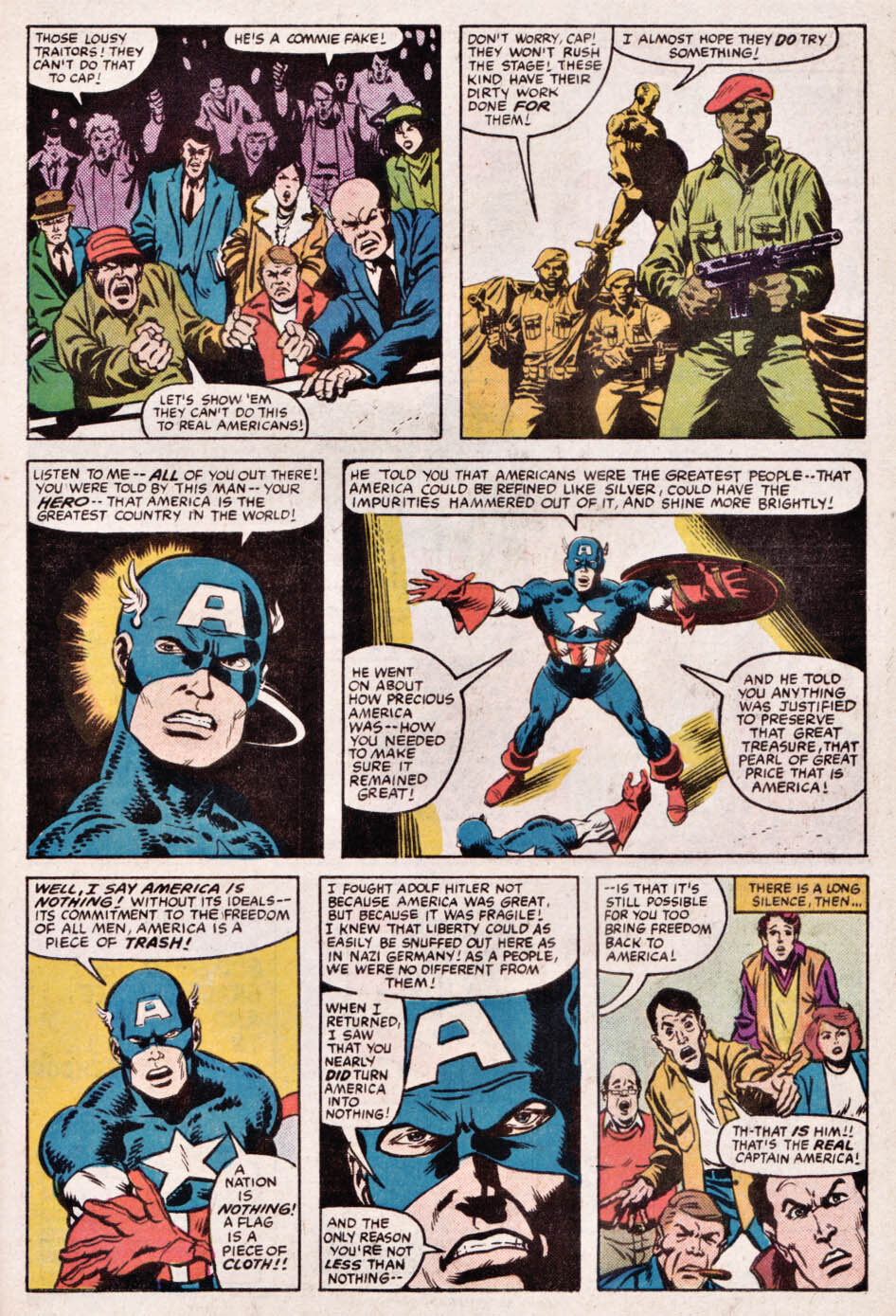
The mistake is to run away from these failings, or whitewash them in the name of defending America’s greatness. The task is to learn from them, and to pursue greatness, healing the wounds as best we can. That is not something that can be left to someone else; it is incumbent on all of us here to strive towards this.
But what would this better America look like? Events of the past, and how they are viewed today, provide a guide.
At My Lai, helicopter pilot Hugh Thompson Junior intervened against the massacre:
Thompson and his crew continued flying over the scene and they saw a group of civilians running toward an earthen bunker with American soldiers following them. So, according to multiple accounts, Thompson did something that went against his military training and against the traditional concept of friend and enemy in war. It also took unthinkable courage. He landed the chopper directly between the advancing Americans and the bunker. He told the Americans that if they fired on the Vietnamese civilians--or on him--his crew would fire on them. He ordered Colburn and the helicopter's crew chief Glenn Andreotta to cover him with their weapons. Then he motioned for the civilians inside the bunker to come out and he arranged for their evacuation with other helicopter pilots who were his friends. The C Company soldiers looked on but thankfully held their fire.
Thompson is nowadays considered a hero. He received the Soldier’s Medal in 1998, and his actions began to be taught by the Army as a model of good soldiering.
What is not remembered is that, at the time, he was shunned and insulted. He received death threats over the phone, and mutilated animals on his porch. A senior congressman made a public statement of “if anybody goes to jail in this My Lai stuff, it will be the helicopter pilot.”
What is remembered is the myth. The helicopter pilot is lauded as an example of American greatness, and what is forgotten is the response to the heroism of him and his crew.
The second sentence of the Declaration of Independence reads:
We hold these truths to be self-evident, that all men are created equal, that they are endowed by their Creator with certain unalienable Rights, that among these are Life, Liberty and the pursuit of Happiness.
These words are now widely seen to apply to all and women. But four of the five drafters of the declaration owned slaves, and a section of their original draft denouncing the slave trade was stricken by Congress before it was signed.
Additionally, one of the main components of participation in a representative democracy, suffrage, was heavily restricted even among white males in the states. Some states required property ownership as a condition of voting until 1856. Black people were prevented from registering and practicing their right to vote through a variety of overt segregationist tactics up until the mid 1960s, and suppression of voting rights through racial gerrymandering and targeted voter roll purges continues.
So it is clear that many of the freedoms considered quintessentially American were not part of the country until late in the 20th century, and there are widespread measures against these freedoms even today. But even the defense of these suppression tactics is rarely done in a way that opposes the American *concept* of liberty. The “quiet bit” is rarely said out loud (although I admit that it sometime is).
----
So what does it mean that America maintains a myth of its own greatness, one that is frequently contradicted by its own history? It’s easy to dismiss this as mass delusion, and there is some truth to this. To me, this seems correlated with the division between nationalism and patriotism. Orwell, in Notes on Nationalism, wrote that nationalism is
[…]the habit of identifying oneself with a single nation or other unit, placing it beyond good and evil and recognizing no other duty than that of advancing its interests. Nationalism is not to be confused with patriotism. Both words are normally used in so vague a way that any definition is liable to be challenged, but one must draw a distinction between them, since two different and even opposing ideas are involved. By ‘patriotism’ I mean devotion to a particular place and a particular way of life, which one believes to be the best in the world but has no wish to force on other people. Patriotism is of its nature defensive, both militarily and culturally. Nationalism, on the other hand, is inseparable from the desire for power. The abiding purpose of every nationalist is to secure more power and more prestige, not for himself but for the nation or other unit in which he has chosen to sink his own individuality.
Like a someone incapable of introspection, a nationalist might argue that America is and always has been great, that where fact and history may show otherwise, then the truth is a lie. They stand before the mirror, dissolved into this idea of the nation, and cannot understand its wrinkles or pores, are blind to its scars, and attest against all evidence that it is without blemish—and that you’d better accept it, or face the consequences.
Whereas a patriot is not dissolved into the nation, and look upon it with love despite its scars or history. They will seek to help it realize its best self.
Now, my countrymen, if you have been taught doctrines conflicting with the great landmarks of the Declaration of Independence; if you have listened to suggestions which would take away from its grandeur, and mutilate the fair symmetry of its proportions; if you have been inclined to believe that all men are not created equal in those inalienable rights enumerated by our chart of liberty, let me entreat you to come back. Return to the fountain whose waters spring close by the blood of the Revolution. Think nothing of me - take no thought for the political fate of any man whomsoever - but come back to the truths that are in the Declaration of Independence. You may do anything with me you choose, if you will but heed these sacred principles. You may not only defeat me for the Senate, but you may take me and put me to death. While pretending no indifference to earthly honors, I do claim to be actuated in this contest by something higher than an anxiety for office. I charge you to drop every paltry and insignificant thought for any man's success. It is nothing; I am nothing; Judge Douglas is nothing. But do not destroy that immortal emblem of Humanity - the Declaration of American Independence.
He exhorted a return to that ideas held in that declaration, even though these were not the lived experience of the nation. That appeal to greatness, the appeal to pursue it in earnest, is one borne out of love.
So what do I believe about America?
I believe that the founders of this country based it on ideals that burn bright, that these ideals exceeded their ability to comprehend, and that America is at its best when it advances towards a fuller realization of those ideals.
And I believe that a country incorporated (albeit unintentionally) around the realization of human rights, rather than a particular ethnic group, is worth a damn, and worth defending.
Optics

From Surrogate Angels of Death by Rhona Garelick:
Imagine this: A shooter has entered a public place, where you are walking with your family. You have but a minute to realize you can save your 2-month-old by using your own body to shield him from the bullets raining down around you. Mere days later, your baby, the youngest survivor of the El Paso massacre, will appear on television with the very man who inspired the terrorist who killed both you and your husband. A photograph is taken, for posterity.
In the photo, your baby wears a bowtie and tiny jacket; someone has dressed him up for this occasion. He gazes off to the side (toward his aunt, who stands beside First Lady Melania Trump), his body stiff, his face solemn. He is not at ease in this strange lady’s arms. How could he be? Your child has just gotten out of the hospital, where he was treated for broken bones incurred when you desperately threw yourself over his little body and took the bullets that seconds later orphaned him and his two siblings.
Neither the president nor Melania so much as glances at Baby Paul. Oblivious (as ever) to the solemnity of their occasion, they smile broadly, matching veneers on full beam. Your husband came from a family of Trump supporters. Perhaps, in a different world, you might even have wanted to meet Donald Trump, or take a photo with him as he gave one of his signature thumbs-up gestures — everything is A-OK here.
Imagine this, then look at this photo again.
Well worth the read, along with the article Trump’s El Paso Photo Is Obscene by Graeme Wood.
Expansion
I think it’s worth pulling at what I hinted in my last blog post.
The arguments of many Republicans in favor of Trump are on their face laughable. Let’s take a look at Representative Louie Gohmert’s questions at the recent hearing of the Judiciary Committee:
Gohmert: Well listen, regarding collusion or conspiracy, you didn’t find any evidence of any agreement—and I’m quoting you—among the Trump campaign officials and any Russia-linked individuals to ‘fere with our US election, correct?
Mueller: Correct.
Gohmert (his voice beginning to shake): So, you also note in the report that an element of any of those obstructions you referenced requires a corrupt state of mind, correct?
Mueller: Corrupt intent, correct.
Gohmert: Right. (Gohmert begins to shout passionately) And if somebody knows they did not conspire with anybody from Russia to effect the election, and they see the big Justice Department, with people that hate that person, coming after ‘em, and then a Special a-Counsel appointed who hires dozen or more people that hate that person, and he knows he’s innocent, he’s not corruptly acting in order to see that justice is done, what he’s doing is not obstructing justice, he is pursuing justice, and the fact that you ran it out two years means you perpetuate injustice.
What actions might this include? From [Representative Cedric Richmond’s questioning of Mueller]:
Richmond: So it's fair to say the President tried to protect himself by asking staff to falsify records relevant to an ongoing investigation?
Mueller: I would say that’s, ah, generally a summary.
Richmond: Would you say that, that action, the President tried to hamper the investigation by asking staff to falsify records relevant to your investigation?
Mueller: I am just going to have to refer you to the report if I could for, ah, ah, review of, ah, that episode.
Richmond: Thank you. Also the President's attempt to get McGahn to create a false written record were related to Mr. Trump's concerns about your obstruction of justice inquiry, correct?
Mueller: I believe that to be true.
In other words, Gohmert’s argument is that someone can ask their staff to falsify records, in effect lying to investigators, if they know they are innocent–and indeed, this is part of some noble effort “pursuing justice”.
This is obviously ridiculous. Given Trump’s high approval rates among Republicans, and (as shown in my previous post) his viciousness towards his in-party enemies, it’s easy to see why a Republican would want to be seen as supporting the President. But presenting an argument in defense of someone does not mean that the argument itself is sound, nor does it mean that the argument itself is the point.
Christian apologetics are often assumed to be means of defending the beliefs of Christians to external actors, but they have often been used by Christians to shore up their own beliefs—and it is not just in Christian circles that this occurs. There is nothing wrong with this if the arguments are sound. But statements like Gohmert’s are so intellectually brittle that, if you look at them seriously for but a moment, they crumble. When a weak argument is used as an apologetic, this is only of use for those looking for an excuse rather than a reason to continue believing what they already believe.
Arguments like those from many Republicans today are a simulacrum of reason. They are constructed not to illustrate the truth, or assist in the search for the truth, but instead both to provide this excuse to the “witch hunt!” crowd and, accompanied by the emotional outburst brought by Gohmert, an impassioned declaration of support for the party’s leader.
They might as well be chanting “Long live the party! Long live Saddam Hussein!”
Purge
On the 1979 Ba’ath party purge, from the article For dictator, a ravenous rise to rule:
With 1,000 top Baath Party leaders gathered at short notice in a Baghdad auditorium, Hussein told them somberly that a plot against the regime had been uncovered.
”We used to be able to sense a conspiracy with our hearts before we even gathered the evidence," he said. "Nevertheless we were patient, and some of our comrades blamed us for knowing this but doing nothing about it."
Then he called on stage a top party officer who had been arrested and tortured after daring to protest Hussein's seizure of power. Brought from prison, where he had been threatened with the rape and murder of his wife and daughters, Muhyi Abdul Hussein Mashadi confessed that he had plotted with Syria to overthrow the Iraqi regime - and that his co-conspirators were in the audience.
Then a security official read the names of 66 miscreants, who were led from the hall as relieved survivors began to outdo one another with chants denouncing the plotters and declaring, "Long live Saddam Hussein!" Hussein sat quietly, wiping away tears at one point, as if saddened at the perfidy of his former friends.
Twenty-two of those arrested were executed with shots fired by Baath leaders offered the chance to prove their fealty. Hussein made sure footage of these "democratic executions" was added to the tape before copies were distributed to Baath activists across Iraq.
The black dog
I haven’t posted on this blog for a while, at least not in length. This is partially down to our family moving home, but also that I’ve wanted to write about a particular topic, and once struck the bell cannot be unrung. Others have been braver than I, and shared their own struggles, but it’s taken me quite some time to be ready to share my own.
I’ve suffered with depression for as long as I can remember. It has nearly cost me life more than once. For a long time it was more of a constant in my life than anything else.
My earliest memories of it are as a weight that hung on me that I couldn’t shift. It’s common to confuse depression with sadness, but one might as well confuse climate with weather. I felt happy (sometimes excitedly so) while still feeling that cold ball in my chest pulling me down.
My mind twisted itself around the problem. Why did I feel this way? Along with being both aware of my own exclusion from social life in school, and completely unaware of what was causing it, I started to believe that there was something *off* about me at a much more fundamental level than suffering an illness.
There’s a page from the comic Supreme Power that struck a chord.

I took the pain that I felt as a guide. I had to try to get rid of it, and anything that helped me forget it was worth pursuing. I didn’t fall into substance abuse or the like as some people have but, at its worst, I hoped that relationships might fix the problem—because even if I didn’t accept myself, at least I’d know that someone else did. Given that this is too much to expect someone else to solve, things never worked out, and when they failed I fell back into the pit. I was certain that they finally saw the flaw in me, that I still couldn’t identify, and ran from me.
I asked friends for what was wrong with me, and they told me that there was nothing wrong with me that wasn’t wrong with a lot of people. But I “knew” that I wasn’t right. That I needed to change something fundamental about my nature. And I could never figure out what it was, so I could never fix it. So what to do?
Once I found myself on the edge of a roof terrace recalling every single step that brought me there, but having no idea why I would do so. It took a great exertion of will to pull myself back. It took medication and the enormous help of my now wife to get me to the point where I could function properly.
The only fundamental problem I had was in accepting that this is an illness.
If any of this seems familiar to you, please seek help. I have a life now I would never believe living before my illness was treated. I still have depression, but it’s managed. Speak to your doctor and try find something that works for you.
Deeper horror still
At a rally this week, Trump supporters chanted the obviously racist “send her back”, mirroring Trump’s own racist tweets on Omar and other congresswomen of color.
But I want you to look carefully at the video. Specifically, in the bottom right. A young girl stands behind the president and, as the chant begins, you can see her mouth along.
This is chilling. I don’t particularly blame the girl (her being so young), but to see such a repugnant wave of bigotry be mimicked by a child is deeply unsettling.
I’ve been feeling sick in my stomach, ever since those tweets and the ensuing shitfest that has been their defense. This is the America of slavery, Jim Crow, and the internment camps, still living and still strong in 2019.
TERF
There's been a lot done over the years to advance the rights of trans people over the world, and this is on the whole a good thing. Trans people attempt suicide at rates far exceeding the population at large. LGBTQ young adults have a 120 percent higher risk of reporting homelessness compared to youth who identified as heterosexual and cisgender. Trans people deserve dignity, respect, compassion, and fair treatment under the law. The Trump administration has been working against this on many levels, proposing to repeal protections that prevent doctors from denying trans people general medical care on the basis of them being trans.
It is undeniable that trans rights need protecting. What is not certain is how that might be best achieved, and I’m concerned about a roadblock here.
Many who are agitating for trans rights insist that one should use a person’s preferred pronouns and current name, and will claim that “trans women are women” and “trans men are men”. While the pronouns and names are matters of ordinary politeness, the last points cause me discomfort and I have yet to be convinced of their accuracy.
For most of my life, the terms “man” and “woman” meant “adult male” and “adult female”, respectively, and I had no particular prompt to consider otherwise until recent years. But here is where the roadblock exists: I’ve found myself hesitant to discuss this, out of a fear of being labelled transphobic or a TERF. Conversations about this on Twitter appear polarized to say the least, and so this fear seems a reasonable one.
Here are my questions:
If gender is a social construct, why is self-identification sufficient? Surely one’s gender is a function of both society at large and the individual, and not something that a person has sole agency over?
Why (for example) are trans men part of the group “men” (which contains cis men and trans men) instead of some new superset, keeping “cis men” as “men”?
The idea of “trans” seems to assume a gender binary instead of a wider set of categories. Why is this?
I am not making any particular claims as to what is true here, but I wonder: where can such a discussion can be had in good faith? Honest ignorance should not be inescapable.
Obviously, there are plenty of bad-faith pricks out there, and it is not the responsibility of anyone to educate me. But both the idea of staying ignorant of this, or pretending to believe something (instead of simply not knowing) for the sake of avoiding confrontation, are repellant. I suspect I am not alone in this.
The warning light that is fear
I read a review of an old episode of The Leftovers today. Of the many things that struck me in the piece, what stood out most was this paragraph:
Ripley is the only human being to get on her ship at the end of “Alien”; She is alone, but the ghosts come with her. (And that movie is one of my all-time favorites not for showing that Ripley was brave, but for showing that she was afraid, so very afraid. And she did it all anyway.)
Of course, Ripley was brave. The flaw in this analysis is the confusion of bravery with a lack of fear. But to be brave is to overcome one’s fear—and fear is not intrinsically bad.
I've been accused of bravery at times when I was not afraid. Sometimes for something as banal as buying a woman I liked flowers. Another time because, after seeing a dog run over by a car and killed, I dragged it off the quiet road so it would not be subject to further indignity in death.
In one of the many times of recklessness on a bicycle (and one of the few on a public road), I cycled between a bus and a flat-bed truck. As we turned a corner, the bus and truck moved closer to one another until there was less than a foot separating me from both of them. I was surprised, in real danger, and totally without fear. I remember telling some friends about this, and being accused of boasting about my own bravery, but my intent was instead to tell them of my worry that there was something fundamentally broken about my fear response.
We treat fear as this thing more than it is. We berate ourselves for feeling it. But fear is a valuable thing. Ripley was right to be frightened of the xenomorph. Imagine how invincible or delusional she would have to be to not fear a creature that could kill her in an instant.
In our own lives we have much to be fearful of. A car might knock us down as we cross the road. A live wire might fry us if we touch it. A hot pot might scald us. Fear can serve as a useful tool, an instinctual evaluation of one’s circumstances that forces our consciousness to further evaluate our next course of action.
And if you think of it, what is there to praise if bravery is simply the absence of fear? You might as well praise someone for having a nose as for being fearless. It is no accomplishment. But bravery is to take that fear and to say “you will not stop me!”
When I see this young girl stand up and plead her case for her own humanity, and I see her fear but still she speaks, there she shows her clear and commendable bravery.
Sometimes the warning light can malfunction, and we can be afraid of things that are of no threat. But that does not eliminate either the value of fear generally or the bravery of overcoming those specific fears. We give each other such a hard time for being afraid that we miss the countless acts of bravery we and others achieve in spite of it.
A neighbor’s flag
In September, my family and I moved from Dublin to a town in Connecticut. It’s been a mostly positive experience here, though I don’t know if I’ll ever get used to the heat or the mosquitos. A friend from South Carolina thought this was amusing but, if her description of her home state is accurate, South Carolina is a dense, blisteringly hot fog where the small part of the air that isn’t water vapor is instead those irritating bloodsuckers. She may be exaggerating.
Our neighbors have been universally welcoming. Some of them have bumper stickers on their car (or door), and the occasional banner for a local political candidate. This is another change. Perhaps on game days (match days to the Irish) the odd person might hang their team colors from their windows, or put up a poster in their window. Otherwise, homes remain silent as to the loyalties of their occupants. Here, on the streets that surround our own, flags for various college and high school teams hang permanently from doorways, joining the ubiquitous stars and stripes.
One flag surprised me, at least in my reaction to it—a large Trump 2020 flag, hanging off a house a few streets over.
I won’t ascribe motives to the person who put up the flag. It’s certainly a brave thing to do in Connecticut and, for all I know, this person could be a prankster trying to get someone’s goat. Or they may be entirely sincere. I don’t know.
What I do know is that the flag, MAGA hats, and other signs and symbols of the Trump administration, remind me that I am not entirely welcome in this country.
I moved to the United States with my American wife and our two Irish-American children. Though my dealings with USCIS and the State Department were always polite and professional, processing times for immigrant visas rose sharply under the Trump administration. These processing times are also somewhat misleading—there were many other delays, additional processing times at different departments, etcetera. For example, there was a gap of five weeks between USCIS stating that the application was sent to the State Department, and the State Department recognizing it as received. All in all, it took 13 months from the submission of our application to receiving my visa.
The American Immigration Lawyers Association has characterized these delays as “crisis-level”, and they seem set to continue with the shuttering of 24 USCIS offices. Despite claiming to support legal immigration, the Trump administration seeks to dramatically reduce it. Famously, the administration rejected a 25 billion dollar funding deal for the wall, with protection for DACA recipients, because it did not include “massive cuts to legal immigration”.
The positions and actions of the administration here betray a deep distaste for immigrants, legal or otherwise. I don’t think that every Trump supporter feels this way, but I do know that they don’t care enough to severe their ties. And to wear a MAGA hat on your head, or to fly a Trump flag outside your home, is to proclaim at least your acquiescence to ostensibly racist policies.
I can only imagine how much less welcome those immigrants with darker skin than mine, or who are undocumented, must feel.